Compare salon booking options by fees and booking model
Compare treatwell alternatives for salons by booking model and total fees. Weigh marketplace commissions against subscriptions and assess what suits your salon.

Salon booking options generally fall into two models: a marketplace, where customers can discover and book salons, or standalone software, which gives a salon its own online booking channel. Marketplaces may charge commission on bookings, while subscription software typically uses a recurring fee. Compare the total cost alongside how each option helps you attract and manage bookings.
It is easy to focus on the headline fee, but the booking model matters too. A marketplace can support discovery; standalone software can give you more control over the booking journey and direct client relationships.
This guide explains how the models differ, how commissions and subscription fees affect costs, and what to assess before choosing salon software. It also covers common selection mistakes, so you can compare options with the way your salon actually works.
Key Takeaways
- Choose between marketplace discovery and standalone booking software by deciding whether you prioritise reaching new clients or managing direct bookings.
- Compare the full fee structure, including commissions, subscription charges and any payment-related costs that apply to your booking mix.
- Before switching platforms, plan how you’ll move key client information and keep your booking journey clear during the changeover.
- Shortlist software against your treatments, team setup and preferred client experience, then use the decision guide to identify the best-fit model.
Marketplace versus subscription booking platforms
Marketplace platforms combine appointment booking with client discovery. Subscription software centres on scheduling through a salon’s own booking page, with costs shaped by its plan and booking mix.
Salon booking marketplaces
A salon marketplace lets clients browse business profiles and book appointments through the platform. That discovery channel differs from standalone software, which supports bookings without relying on a marketplace profile. Consider whether new-client visibility or direct control of the booking journey matters most. Compare the models with how clients currently find your salon.
Direct booking channels
Instagram and Google can direct clients to a salon’s booking link, while the booking platform handles appointment scheduling. Add the current link to your Instagram profile and Google Business Profile, then test that it opens the right booking page. This route relies on your own channels rather than marketplace discovery and can suit salons that want clients to book directly.
Switching booking systems
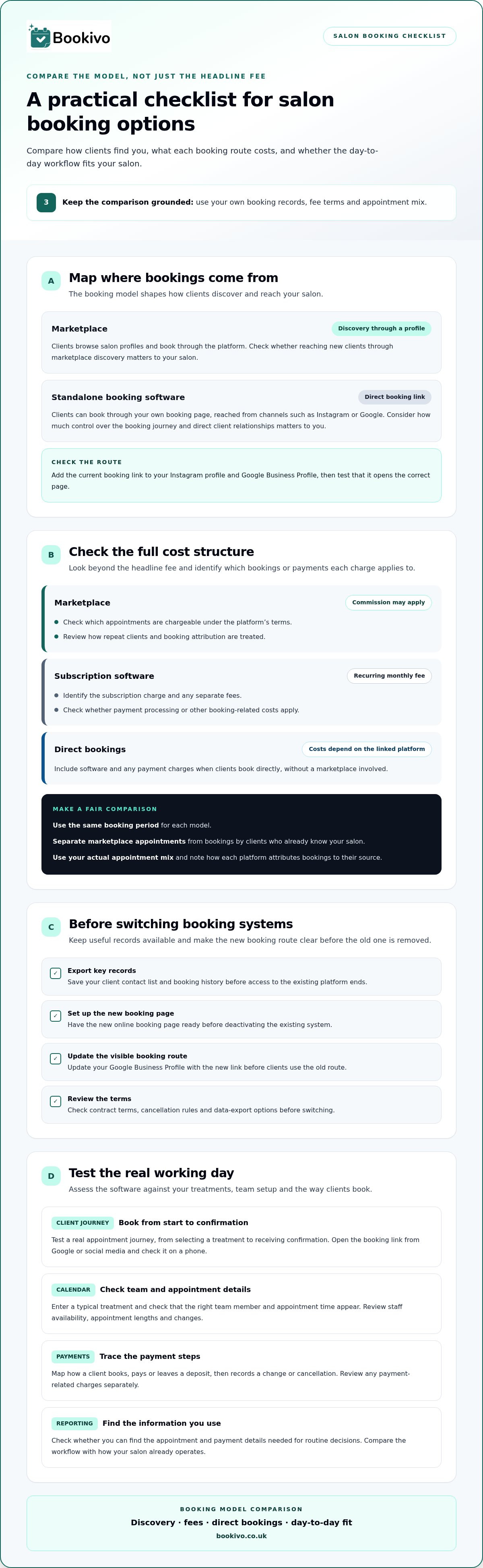
Before deactivating an existing booking platform, export your client contact list and booking history, then set up the new online booking page. Update your Google Business Profile with its booking link before clients use the old route. Review contract terms, cancellation rules and data-export options before switching. These steps help preserve useful records and keep the next booking route visible.
Independent salons and mobile therapists may prefer subscription software with a direct booking page; multi-site businesses should prioritise scheduling that supports their team structure. Compare plans by monthly subscription, included tools and booking workflow.
Salon owners’ views on alternatives vary, so individual comments don’t establish which system is most reliable. Assess support arrangements and booking reliability against practical needs, such as how clients get help and how appointments appear in the calendar.
| Option | Client discovery | Booking route | Cost model |
|---|---|---|---|
| Marketplace | Marketplace profile | Platform booking | May include commission |
| Subscription software | Your own channels | Direct booking link | Monthly subscription |
| Instagram and Google | Your own profile | Link to a booking page | Depends on linked platform |
Choose by comparing discovery, booking control, fees and data-export terms with your salon’s day-to-day needs.
When switching from Treatwell, export the client contact list and booking history before access ends. Set up a new online booking page before deactivating your account.
Salon software costs and commission models
A marketplace model connects salon bookings with client discovery. Commission-based charges apply to bookings covered by the platform’s terms, so costs change with the number of bookings made through that channel. Review the account terms and fee schedule to see which appointments are chargeable and how repeat bookings are treated.
Subscription software works differently. A monthly subscription is a recurring cost, whether booking activity is high or low. The total may also include separate charges, such as payment processing, so compare the full schedule rather than one headline figure. Don’t assume every online appointment follows the same charging model.
To compare commission with subscription costs, use your own booking records. Separate appointments generated through a marketplace from bookings by clients who already know your salon. Then compare marketplace charges with subscription and other applicable fees for the same period. This shows whether paying for discovery fits your client base or whether direct bookings better match how people already find you.
- Marketplace: Check which bookings attract commission, including how the terms treat repeat clients.
- Subscription: Identify the recurring charge and any additional fees linked to bookings or payments.
- Direct booking: Include software and payment charges when clients book directly, without a marketplace involved.
Before switching, calculate each model using the same booking period and your actual appointment mix. Check whether existing clients can book directly, and note how the platform attributes each booking to its source. A client who first discovers your salon through a marketplace may later use a direct booking link, so attribution terms can affect the comparison.
For a clear view of a direct booking journey, preview a branded booking page for your salon. Weigh its role against recurring software costs and any charges attached to online payments.
Avoiding common salon software selection mistakes
Don’t choose salon software on its monthly fee alone. Test a real appointment journey, from selecting a treatment to receiving confirmation. Check how the calendar handles staff availability, appointment lengths and changes. A low monthly fee offers little value if your team has to work around a booking process that doesn’t match the salon’s daily routine.
Test payment steps separately. Map how a client books, pays or leaves a deposit, then records any change or cancellation. Review the reporting too: can you find the appointment and payment details you need for routine decisions? If your salon already has a clear booking process, compare software against it rather than changing habits to suit a new platform.
- Check the client journey: Open the booking link from Google and social media, then test it on a phone.
- Test the calendar: Enter a typical treatment and check that the right team member and appointment time appear.
- Review reporting: Find an example appointment and payment record without relying on memory or separate notes.
Don’t overlook the client-facing details. Read each booking screen as a client would, including treatment descriptions, available times and the cancellation or deposit information shown before booking. Clear presentation helps clients understand the process before committing to an appointment.
Use a 90-day setup plan instead of changing every workflow at once. During weeks 1-2, configure treatments, pricing, team calendars and the booking flow. In weeks 3-6, train the team, launch with clients and set cancellation and deposit policies. During weeks 7-12, review reports and refine settings. This staged approach gives staff time to learn the system and helps you spot practical issues before they become routine.
What are the best alternatives to Treatwell for UK salons and beauty businesses?
There’s no single best alternative for every UK salon. Options include marketplaces, subscription booking software and direct booking links connected to a salon’s own website or social profiles. The right choice depends on how clients discover your business, how you organise appointments and which parts of the booking journey you want to manage yourself.
Compare platforms by their booking model, charges, support for your team and the client experience they provide. A salon focused on reaching new clients may value marketplace discovery. A business with an established client base may prioritise a branded booking page and a clear route from its own channels.
Use these needs to narrow your shortlist:
- Independent salon: Look for a booking journey that reflects your treatments, opening hours and client preferences.
- Multi-site business: Assess how each option supports the way you organise locations, staff calendars and appointment oversight.
- Mobile therapist: Consider whether clients can book through a link that’s easy to share from your own channels.
- Business seeking discovery: Weigh the value of a marketplace profile against its booking terms and charges.
Test a typical client journey on each shortlisted platform. Start with the profile or link a client would use, then check treatment details, appointment choices and the steps needed to complete the booking. Review the terms for data exports and account closure too, so your comparison covers the practicalities of changing systems.
Choose according to your priorities, not a general ranking. A salon that needs more marketplace discovery may favour a different model from one that wants to direct existing clients to its own booking page. List your essential requirements, compare each option against them, and rule out tools that add complexity without meeting a clear need.
After switching from Treatwell, update your Google Business Profile with your new direct booking link so clients can reach your booking page directly.
Bookivo: Beauty & Salon Booking Software
Bookivo is a natural fit for UK salons looking for standalone booking software rather than marketplace-based client discovery. Its online appointment booking system includes a branded booking website where clients can manage appointments, leave deposits and make online payments 24/7.
Consider Bookivo if you want clients to book through your own branded page, with booking tools designed for beauty businesses. Compare its booking journey with your salon’s needs and the marketplace model you’re moving from.
Choose the approach that supports the way you want to run your salon, and move forward at a pace that works for you.
Frequently Asked Questions
Marketplace or standalone software: what’s the difference?
A marketplace lists businesses for clients to discover, while standalone software gives a salon tools to manage its own booking journey. For example, a new client might find a salon through a marketplace, while an existing client books using a link on the salon’s website. Some businesses use both routes, but compare how each handles client records and booking sources.
What are the booking fees, subscription prices and payment charges for UK salon booking platforms?
Costs depend on the platform’s charging model and the payment services you use. A marketplace may charge for bookings it generates; subscription software charges a recurring fee, and payment processing can be a separate cost. Compare current terms using your own mix of new and returning clients. Include booking-related charges and payment fees in the same calculation, rather than comparing headline figures alone.
Which alternatives let UK salons manage online bookings through their own website and Google or social media?
Standalone booking software can give a salon a booking page or widget to share through its own website, Google Business Profile and social media. Bookivo provides a branded booking website for direct client bookings. Before choosing a platform, test how a client moves from your profile to an available appointment, and make sure the booking link is easy to find across your usual channels.
What contract terms, cancellation rules and data-export options should salons check before switching?
Review contract terms, cancellation rules and data-export options before switching. Export your client contact list and booking history, set up the new booking page, and update your Google Business Profile before deactivating the old platform.