Booksy alternatives UK: salon booking software choices
Explore booksy alternatives uk for salons, barbers and beauty businesses. Compare booking features, fees, client details and trials to find a practical fit.
The obvious alternative isn’t automatically the right fit. To shortlist booking options in the UK, start with how you run your business: compare online appointments, payments, client information and the booking experience customers see. Choose a system that supports your day-to-day work without adding unnecessary complexity.
It’s also sensible to think about the content you use in your business. If you reuse public-sector information, the National Archives’ UK Government Licensing Framework explains the licensing principles for using and reusing that material, including the Open Government Licence. This guide will help you compare booking software choices for UK salons, barbers and beauty businesses, and understand when copyright and attribution deserve attention. You’ll have a practical basis for choosing a system that suits your services, team and preferred way of managing bookings.
Key Takeaways
- Compare booking systems by how well they fit your services, team and preferred booking experience, not by one feature alone.
- Look closely at what a free plan or trial includes so you can judge whether it suits your day-to-day needs.
- Check how client booking fees, deposits and cancellation terms work before choosing a platform.
- When reusing public-sector information, remember that UK legislation defines Crown copyright under section 163 of the Copyright, Designs and Patents Act 1988.
Table of Contents
- What are the best Booksy alternatives for UK salons, barbers and beauty businesses?
- Which UK salon booking systems offer free plans or free trials?
- Which Booksy alternatives charge clients a marketplace or booking fee?
- Which UK booking apps support deposits, cancellation fees and no-show protection
- Bookivo: Beauty & Salon Booking Software
What are the best Booksy alternatives for UK salons, barbers and beauty businesses?
Salon booking software helps manage appointments and related business tasks. The right option depends on your services, team and preferred booking journey. A solo nail technician may prioritise a simple way to manage appointments, while a busy salon may need team calendars and client records. Compare systems against your actual working day, not just their feature lists.
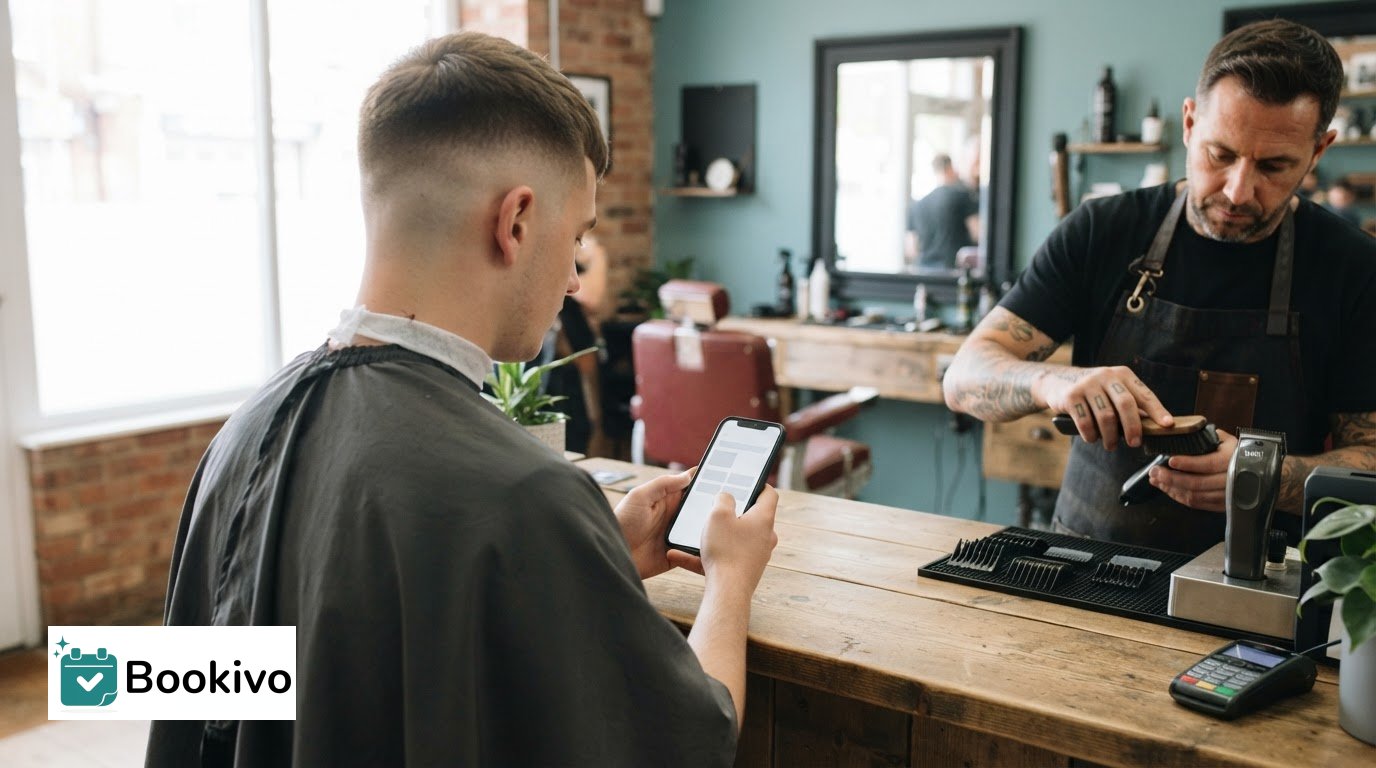
A marketplace is a platform where customers can discover and book multiple businesses. If clients already find you through your own channels, focus on how software supports direct bookings. A branded booking website presents your services under your business identity. A booking software comparison can help show how different approaches suit your customer experience and workflow.
- Appointment management means organising bookings in a calendar. Consider whether the system suits your services, appointment lengths and team structure.
- Client records help bring booking information together instead of relying on separate paper or digital records.
- Online payments let clients pay digitally as part of booking. Compare this with the payment experience you want to offer.
- Booking visibility describes how customers access your availability. For example, a barber may prefer clients to book through a page carrying the business’s identity.
Copyright is a legal protection for original material, including some government information. In the United Kingdom, Crown copyright is defined under section 163 of the Copyright, Designs and Patents Act 1988, according to UK legislation. The National Archives’ UK Government Licensing Framework provides a policy and legal overview of licensing public-sector information. Copyright and attribution can therefore be relevant considerations when public-sector material appears in salon content.
For a practical comparison, match each system to your business model, review the customer booking journey, then consider how appointments and client information are organised. A barber, solo beauty professional and multi-staff salon may each need different tools, so assess options against the work they need to support.
Which UK salon booking systems offer free plans or free trials?
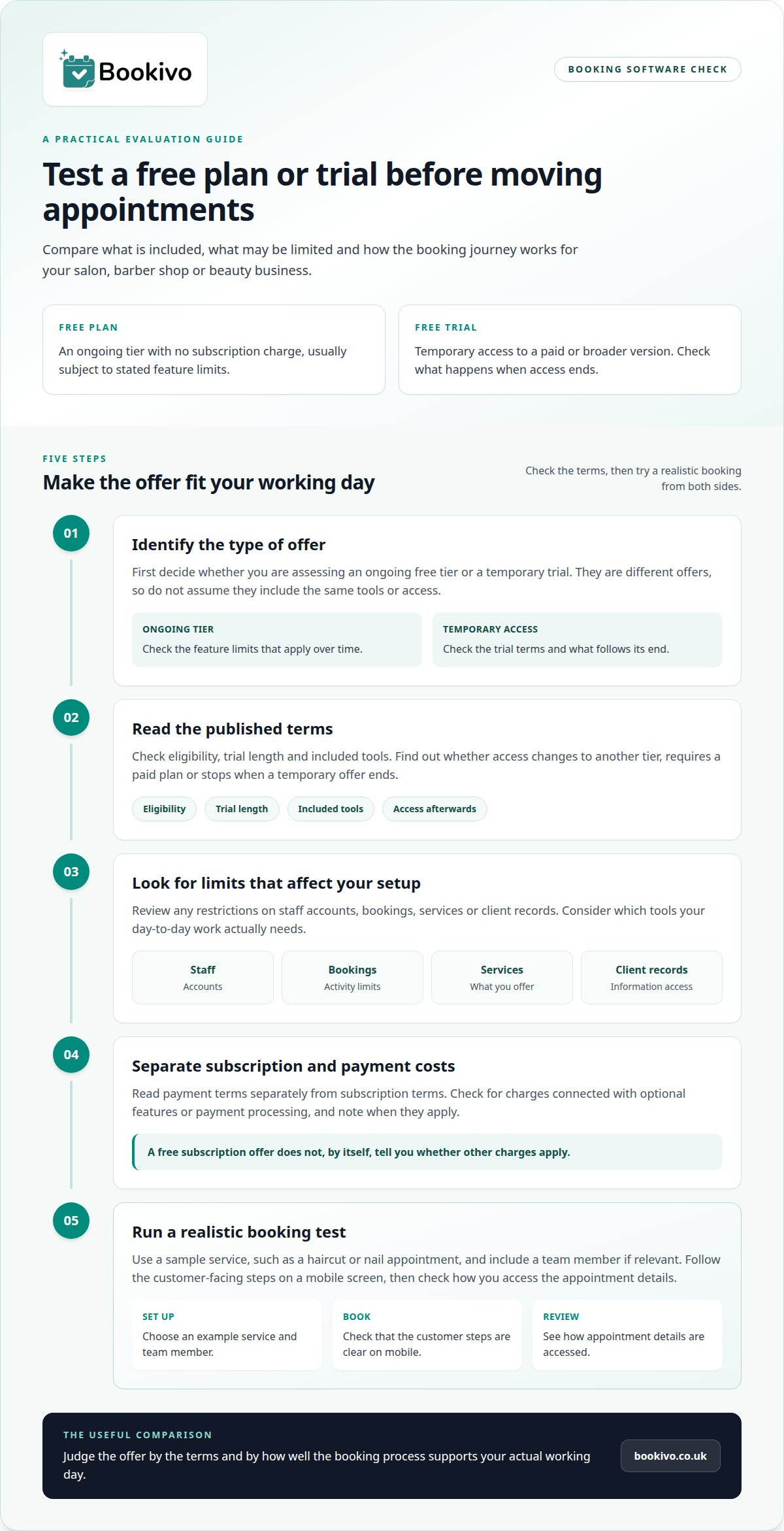
A free plan is an ongoing tier with no subscription charge, usually subject to stated feature limits. A free trial gives temporary access to a paid or broader version. These are different offers, so compare the exact terms rather than treating them as interchangeable.
Which UK booking systems offer either option depends on each provider’s published terms. Check the pricing information for eligibility, trial length, included tools and what happens when access ends. Don’t assume “free” includes every feature. A solo lash technician may need online appointments, while a salon team may also need shared calendars and client records.
Use a short test to assess whether an offer suits your business:
- Included features are the tools available on the free tier or during the trial. Test the booking journey with an example service, such as a haircut or nail appointment.
- Usage limits are restrictions on access or activity. Look for limits affecting staff accounts, bookings, services or client records.
- Payment terms explain any charges linked to optional features or payment processing. Read these separately from the subscription terms.
- After-trial access describes what happens when a temporary offer ends. Find out whether the account changes tier, requires a paid plan or stops working.
Before moving real appointments, test the setup with a sample service, team member and booking. Check that the customer-facing steps are clear on a mobile screen, then see how you access the appointment details. This gives you a practical comparison, rather than relying on a feature list alone.
If a branded booking page is part of your evaluation, preview how a booking website could look for your business. Compare its layout and booking flow with the needs of your salon before deciding which system deserves a closer trial.
In England, some pharmacies offer free flu vaccinations. In England, people can find COVID-19 vaccination sites or pharmacies that offer vaccinations without an appointment. These details concern vaccination access, rather than whether a salon booking system has a free plan or trial. Keep those questions separate when assessing a service, and check the information relevant to the specific service being considered.
Which Booksy alternatives charge clients a marketplace or booking fee?
A marketplace fee is a charge associated with a customer booking through a discovery platform. A booking fee is a charge connected with making or paying for an appointment. Both are separate from the salon’s service price, so check how each system describes its charges.
Fees can vary by platform, booking route and payment method. A customer booking through a marketplace may face different terms from someone booking directly through a salon’s own page. Don’t assume a free subscription means clients pay no fees, or that every marketplace booking adds a customer charge.
Compare the checkout journey for each system you’re considering. Use the same example, such as a haircut booked through a discovery listing and through the salon’s own booking page. Look for any separate charge shown before payment, and note whether the salon or customer pays it. Then read the platform’s current terms to understand when charges apply.
- Marketplace charge means a fee tied to booking through a platform’s discovery area. Check whether it applies to new clients, returning clients or both.
- Payment processing charge relates to handling a card or online payment. Separate it from any booking charge in your comparison.
- Salon subscription is the amount the business pays for software access. It doesn’t, by itself, explain what clients see at checkout.
For a fair comparison, record the booking source, who pays each charge and when it appears. Apply the same checks to every option on your shortlist, using published terms rather than assumptions. This helps you explain the final amount to clients and understand the cost of each booking route.
If direct bookings matter to your business, compare how a branded booking page could present appointments alongside marketplace options.
Which UK booking apps support deposits, cancellation fees and no-show protection
A deposit is an advance payment made when an appointment is booked. A cancellation fee is a charge applied under a business’s cancellation terms. No-show protection refers to tools intended to reduce the financial impact of missed appointments, such as taking payment details or a deposit in advance.
Booksy and alternative UK platforms are common names to include in a comparison, but don’t assume their terms work alike. Check each platform’s current booking and payment settings. Confirm whether deposits can be applied to selected services, whether the salon sets its cancellation terms, and how a missed appointment is handled. These details matter for a lengthy colour appointment as much as for a short barbering service.
Separate the software feature from your own cancellation policy. A booking system may let you request payment, but your published terms explain what clients agree to when booking. Keep the wording visible before confirmation, and make clear whether a payment is a deposit or cancellation charge. Clients should understand the amount and relevant conditions before they commit.
- Deposit settings determine whether payment is requested at booking. Compare how the system applies deposits to different services.
- Cancellation handling concerns what happens when a client changes or cancels an appointment. Look for clear controls and client-facing wording.
- Missed appointments are bookings the customer doesn’t attend. Check what records the system provides and what action remains with the business.
Use a sample appointment to assess each platform: book a service, review the payment step, then test how cancellation information appears. Repeat the same steps across your shortlisted systems, including Booksy. This apples-to-apples check shows whether the process fits your salon’s policy, without relying on broad claims about no-show prevention.
See how an online booking page can present appointment deposits to clients.
A separate point for businesses publishing supporting information: The Re-use of Public Sector Information Regulations 2015 are among the policies supported by the UK Government Licensing Framework and the Open Government Licence, according to The National Archives. This does not establish what any booking app charges or how its deposit and cancellation controls operate; verify those settings directly.
Bookivo: Beauty & Salon Booking Software
Bookivo provides UK salons and beauty businesses with an online appointment booking system and branded booking website. It’s a practical option if you want clients to book through a page under your business identity, rather than relying only on a marketplace listing.
Consider Bookivo when you’re comparing alternatives and want booking software designed for beauty and salon businesses. Assess whether a branded booking experience, online payments and appointment management suit your services and the way clients find you. The right system should make booking straightforward for customers and manageable for your business, without adding tools you don’t need.
Choose a booking setup that can grow with your business
Your booking system should support how you want to run your business next, not just reproduce your current routine. As services, staffing or client expectations change, a suitable setup can help keep your work organised.
Keep your priorities in view as you compare salon booking options. Choose a system that fits your approach and supports the experience you want clients to have.
Move forward at your own pace and shape a booking experience that reflects your professional service.