Salon business management for new salon owners
Salon business management for beginners: build a budget, understand local competitors, plan marketing and organise bookings with clear practical guidance.

A full appointment book doesn’t automatically mean a well-run salon. A practical guide to salon business management for beginners starts with the decisions behind each appointment: what the business can afford, who it serves and how clients experience their visit.
If budgeting, marketing and day-to-day organisation feel like separate jobs, you’re not alone. They’re closely connected: clear costs inform your prices and targets, while reliable communication and convenient booking help build stronger client relationships.
This guide explains how to build a workable budget, assess competitors and plan marketing around your audience, time and resources. It also covers practical client communication and what to look for in salon management software, so you can choose tools that fit the way your business runs. The aim is to make running your salon more manageable, whether you’re starting out alone or preparing to manage a team.
Key Takeaways
- Separate fixed and variable costs to understand what your salon needs to earn and where you can adjust spending.
- Assess nearby salons by their services, audience and presentation, then shape marketing around your own customers and available resources.
- Build client trust through clear appointment communication, a welcoming experience and thoughtful follow-up.
- Choose booking software that fits your day-to-day needs, from managing appointments to offering clients a branded way to book online.
Financial planning and budgeting
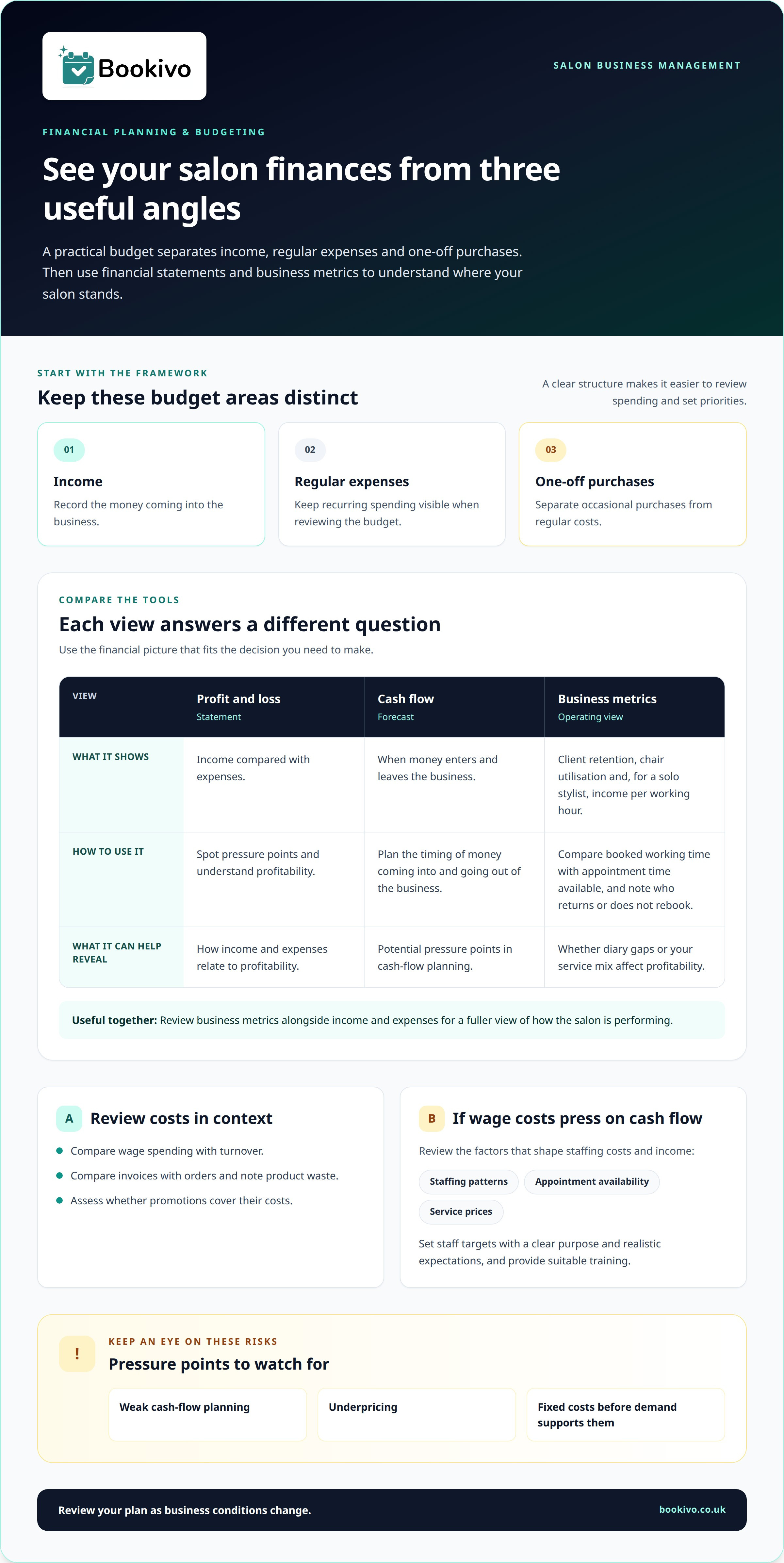
Build a budget that separates income, regular expenses and one-off purchases. This gives your beauty or therapy business a clear framework for reviewing spending, setting priorities and assessing whether your services support your plans.
Planning salon wage costs
Compare wage spending with turnover. If labour costs are putting pressure on cash flow, review staffing patterns, appointment availability and service prices. Set staff targets with a clear purpose and realistic expectations, and provide suitable training. Licensing and health and safety requirements can depend on your services and location. Ask the relevant local council about licensing, and consult Health and Safety Executive guidance for workplace safety information.
Reading financial statements
A profit and loss statement compares income with expenses; a cash-flow forecast helps you plan when money enters and leaves the business. Use both to spot pressure points and understand profitability. To write a UK salon business plan, set out your services, intended clients, expected income and costs, and how you’ll review progress. Update the plan as business conditions change.
Controlling costs and finances
Review recurring bills, stock use and spending by service. Compare invoices with orders, note product waste and assess whether promotions cover their costs. To register a salon business and manage UK taxes and payroll, choose a business structure and use GOV.UK guidance for relevant registration and tax responsibilities. If you employ staff, organise payroll as a separate process. Common risks include weak cash-flow planning, underpricing and taking on fixed costs before demand supports them.
Tracking salon business metrics
Track client retention by recording who returns and who doesn’t rebook. Measure chair utilisation by comparing booked working time with the time available for appointments. Review these metrics alongside income and expenses to see whether diary gaps or your service mix affect profitability. For a solo stylist, income per working hour can also inform decisions about the appointment diary and service menu.
Marketing strategies and competitor analysis
Effective promotion starts with knowing whom your beauty salon serves and why your offer is relevant to them. A simple plan keeps marketing focused on specific clients, channels and outcomes.
Researching the market and customers
Map salons nearby by location, services, booking options and how they present their work. Compare their public offers with your own, then identify a clear point of difference, such as specialist beauty therapy or convenient appointment times. Don’t copy a competitor’s message. Use your findings to identify an audience your salon can serve well.
Group clients by their needs and booking habits. For example, regular colour clients may need different messages from people considering their first facial. Use enquiries, appointment patterns and client feedback to refine these groups.
Planning salon promotion
Choose marketing activities that suit your target audience, appropriate platforms, budget, available time and capacity. Decide how you’ll measure each campaign before it starts. For example, a salon might introduce a new service on social media, then track the enquiries and bookings linked to that promotion.
Keep your message consistent across your website, social profiles and printed materials. Explain what the service involves, who it suits and how to book. Staff training can help develop skills, but promotion should always reflect the salon’s actual services and capacity. Review results and focus on activities that bring relevant enquiries.
Attracting and retaining clients
To attract and retain clients, present your services clearly, make booking straightforward and deliver a consistent experience. Local partnerships and referral prompts can help you reach people already interested in beauty services. Follow up appropriately after appointments.
For example, share a stylist’s work with permission, describe the service accurately and make the booking route easy to find. A branded online booking website can connect promotion with appointment booking. Keep a record of which channels prompt enquiries, and conduct regular reviews so marketing stays efficient as the salon grows.
Client communication and relationship building
Consistent communication shapes the client experience, from the first enquiry to the next appointment. Simple service standards give staff a clear structure to follow.
Conducting client consultations
A professional consultation establishes what the client wants before a service begins. Ask focused questions, listen carefully and explain the proposed service in plain language. For example, a stylist can confirm the requested length and finish before starting. This conversation helps both parties set expectations and gives the practitioner a chance to clarify what the appointment involves.
Record relevant preferences and agreed details consistently, following your salon’s approach to handling client information. Staff training and relevant qualifications can support professional practice, but careful listening matters in every consultation. A consistent consultation process helps the team deliver a reliable experience across different appointments.
Improving the client experience
Customer service includes each point of contact, not just the treatment itself. Send appointment confirmations and reminders, greet clients warmly, keep to schedule and follow up after appointments. These practical steps make communication more predictable and help clients know what to expect from the salon.
Microsoft found that 96% of customers consider customer service important when choosing brand loyalty. Dimension Data research found that 84% of companies working to improve customer experience report an increase in revenue. These findings underline why salons should treat a smooth booking and appointment journey as part of service quality.
Managing client-care quality
Set clear standards for responding to enquiries, welcoming clients and handling feedback. For example, agree how staff should acknowledge a complaint, record the concern and explain the next step. Review feedback regularly to spot recurring issues, such as unclear appointment information or delays, then improve the relevant process.
Use team discussions to share useful feedback and recognise good client care. A short review after a busy day can identify what worked and where communication broke down. Consistent follow-up, accurate records and respectful conversations help maintain client relationships across the salon sector.
Choosing salon management software
Choose software based on the tasks that take time or cause avoidable confusion. The right system should support daily salon operations without adding steps that don’t suit your business.
Map a typical appointment, from booking through to follow-up. Note where information is recorded, who updates it and where errors occur. A solo beauty professional may prioritise straightforward online bookings and client records, while a salon team may need a shared calendar and clear access to appointment details.
Use these checks to compare options:
- List the tasks you need the system to handle, such as appointments, deposits or client records.
- Check whether clients can book through a branded website and whether the booking process is clear on mobile.
- Consider how the system fits your team, service menu and existing client-care processes.
Test the software with a realistic booking. Can a new client find a service, choose an available appointment and get the information they need? Can a team member see relevant booking details without searching through separate records? This practical test shows whether the software supports your routine or simply creates another place to manage.
Keep the decision proportionate. A solo operator may not need the same team tools as a growing salon. Compare the functions you’ll use with the time they could save, and consider how easily the system can adapt as your services or staffing change. Training can develop your business knowledge, while suitable software supports the administrative routines behind it.
Before choosing software, write down your essential needs and useful extras. Prioritise the essentials, then assess how clearly each system handles them. This gives you a practical basis for choosing software that supports your salon’s actual workflow.
Bookivo
Bookivo brings online bookings and salon administration together for UK beauty businesses. Its platform includes a branded booking website and appointment booking, giving clients a straightforward way to book and owners a clearer way to organise appointments.
Bookivo can suit a solo professional who wants clients to book online or a salon managing appointments for a team. The branded booking website gives clients a direct route to view services and make an appointment. It supports the booking side of salon management, while financial planning and marketing decisions remain part of running the business.
If you’re considering a more organised booking setup, See what Bookivo could look like for your business.
Make your next step manageable
A practical approach to salon business management for beginners develops over time. Start with one improvement, then review how it fits your day-to-day work before making further changes. A clearer booking process can be a manageable first step as you build wider business routines.
Bookivo offers Beauty & Salon Booking Software, Aesthetics Clinic Booking Software and an Online Appointment Booking System. These tools help salon and aesthetics businesses manage appointments, while a branded booking website gives clients a direct way to book.
Explore Bookivo’s booking options and request a free branded preview to see how a booking website could fit your business.
Keep building at a pace that suits your salon. Each considered step can help make running the business more organised and confident.
Frequently Asked Questions
Who Is This Course For?
A salon management course may suit people preparing to open a salon, new owners learning the business side, or beauty professionals moving into management. Beginners can use a course to develop knowledge of budgeting, staff organisation, marketing and client care alongside practical industry skills. Before choosing one, compare its level, subjects and assessment format with the responsibilities you want to take on.
What does salon business management involve for beginners?
Salon business management for beginners means organising the work behind the treatments: finances, staffing, bookings, client communication, promotion and daily operations. A new owner might start with a weekly admin routine, review money coming in and going out, and check the appointment diary for gaps. The aim is to make informed decisions across these areas, rather than treating each task as a separate problem.
How much does it cost to start and run a salon in the UK?
There’s no single start-up or running cost: the total depends on your business model and setup. A mobile therapist may avoid some premises expenses, while a salon may need to budget for rent, fit-out, equipment, initial stock, utilities, insurance, staffing and ongoing promotion. List start-up and recurring costs separately, then estimate each item using your plans and supplier quotes.
How should a salon set prices and calculate profit margins?
Set service prices by considering product use, time, overheads and the profit the business needs to retain. For example, a colour appointment uses products and chair time, while rent and utilities need to be covered across the service menu. Subtract the costs attributable to a service from its price to assess its profit, then review your calculations when costs, appointment times or demand change.
What salon booking, payment and management software is best for beginners?
Useful software makes routine administration easier to manage consistently as your business develops. Before switching, plan how client details, appointment history, service lists and notes will be transferred, and decide who will maintain those records. Check what information your current provider allows you to export and what support, if any, is available from your new provider. Planning this step can make the changeover more organised.
How do I manage salon staff, rotas, pay and employment rights in the UK?
Plan rotas around opening hours, staff availability, booked appointments and the skills each service requires. Keep clear records of agreed shifts, hours worked and pay arrangements, and manage payroll as a separate business process. Employment rights depend on the working arrangement and current UK rules, so consult authoritative government guidance or qualified advice when making decisions about contracts, pay, leave or working time.