Stop Salon No-Shows: A Guide for UK Beauty Businesses
Learn how to stop salon no shows with practical booking steps, timely reminders, and sensible deposit policies tailored for UK salons and beauty clinics.
A stricter cancellation rule isn’t always the best way to reduce missed appointments. If you’re working out how to stop salon no shows, the answer may be a clearer booking journey, not a policy that makes every client feel under suspicion. An empty slot can disrupt your day and your income, but it’s understandable to worry that deposits or firm terms could affect client relationships.
You can set expectations clearly and still treat clients fairly. This guide will help you build a repeatable approach that suits your salon, clinic, barbering business or solo practice. We’ll look at what to explain before a client books, when reminders and deposits may help, and how to follow up calmly when someone doesn’t attend. You’ll also learn how to review missed appointments and adjust your process over time, rather than relying on guesswork or reacting differently each time. The aim is a more organised working day, with consistent communication that protects your time without making reliable clients feel unwelcome.
Key Takeaways
- Record no-shows separately from late cancellations to spot patterns and understand how missed bookings affect your schedule.
- To learn how to stop salon no shows, make booking details and expectations clear, then use reminders and deposits where they suit your business.
- When a client misses an appointment, check the record, follow up calmly and note the outcome without assuming why they didn’t attend.
- Bring booking information, reminders and follow-up into a repeatable process, using online tools to make each step easier to manage.
How salon no-shows affect your day, and how to spot a pattern
A missed appointment leaves more than a gap in the diary. It can mean lost income, unused preparation time and a reshuffle of the rest of your working day. Before changing your booking rules, get a clear picture of what’s happening. Consistent records help you distinguish an isolated incident from a pattern worth addressing.
A no-show is an appointment a client misses without attending or contacting the business beforehand. Record it separately from a late cancellation, where the client gets in touch but gives little notice. Using the same definitions each time makes your notes more useful and helps you assess how to stop salon no shows without reacting to one difficult day.
What to record when an appointment is missed
Keep the entry factual and brief. Note the appointment type and time, how it was booked, and whether the client contacted you before or after the slot. Record any follow-up and its outcome when known. Avoid labels such as “unreliable” or guesses about why the client didn’t attend. A clear record describes what happened, not what you think it means.
How to look for useful patterns
Review diary entries over time, rather than drawing conclusions from a handful of appointments. You might notice missed bookings appearing around a particular time of day, appointment type or booking channel. Treat these as prompts to investigate, not proof of a cause. A pattern could reflect several things, including how clearly the booking details were communicated.
Before tightening a policy, check whether clients can easily see the appointment time, service details and relevant expectations when they book. If entries suggest confusion or missed communication, improve that step first and continue recording outcomes consistently. This gives you a more measured basis for deciding what to adjust, while keeping the process fair to clients who attend reliably.
How to prevent salon no-shows without making booking feel unfriendly
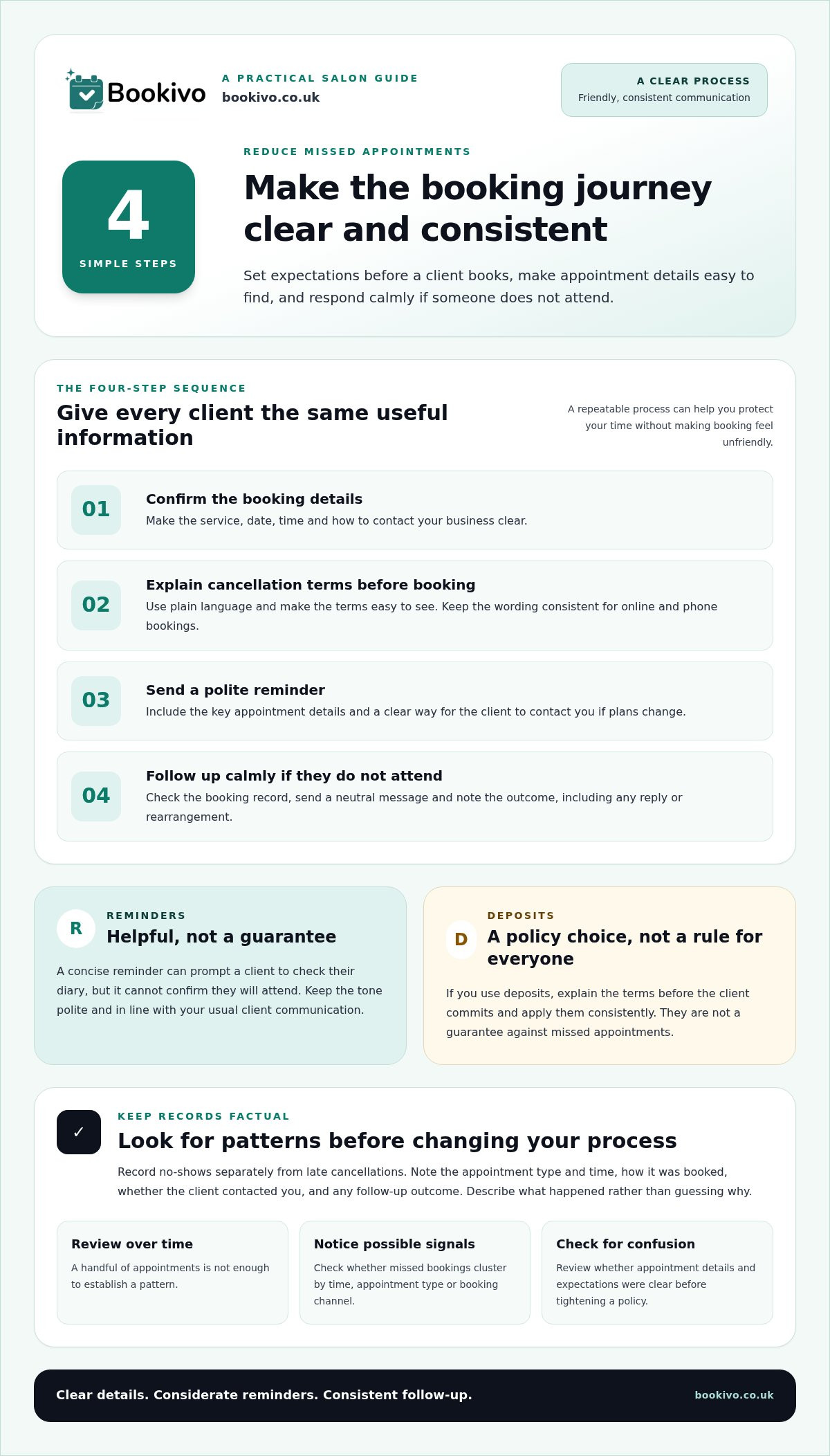
Prevention doesn’t need to start with a harsh rule. A clear, consistent booking journey helps clients know what they’ve booked, what to do if plans change and what to expect from your business. Use a simple sequence:
- Confirm the service, date, time and how to contact you.
- Explain any cancellation terms before the client books.
- Send a polite reminder with the key appointment details.
- If the client doesn’t attend, follow up calmly and record the outcome.
This gives every client the same information and gives your team a consistent way to respond. It’s a practical starting point for how to stop salon no shows without treating a missed appointment as proof that a client doesn’t value your time.
Make appointment details and expectations clear
Make it easy for clients to find their appointment details and contact the business if they need to change them. Keep cancellation terms in plain language and show them before booking, rather than relying on clients to find them later. Use the same wording for online and phone bookings. If you have questions about your terms, check authoritative UK consumer guidance rather than relying on assumptions.
Use reminders and deposits thoughtfully
A concise reminder can prompt a client to check their diary, but it can’t confirm they’ll attend. Keep the message polite and useful: include the appointment details and a clear route to contact you if plans change. Make sure the tone matches your usual client communication.
Deposits are another possible policy choice, not a universal requirement or a guarantee against missed appointments. If you use them, explain the terms before the client commits to the booking and apply them consistently. Choose an approach that fits your appointments and client relationships, rather than introducing a punitive blanket rule.
A branded online booking experience can bring appointment information and expectations together in one place, making them easier for clients to find before they book.
What to do when a salon client misses an appointment
Respond in a steady, repeatable way. First, check the diary and booking record so you can confirm the appointment details and whether the client contacted you. Then send a brief, neutral message through an appropriate channel. Finally, note the outcome, including any reply or rearrangement. This keeps the response professional and gives you reliable information for future decisions.
Don’t assume why the client didn’t attend. They may have forgotten, encountered an unexpected problem or tried to contact the business through a channel you hadn’t checked. A missed booking is worth addressing, but an accusatory message can strain a relationship before you know what happened.
A considerate follow-up message after a missed booking
Keep your wording factual and warm. For example: “Hello [Name], we had you booked in for [appointment] today, but weren’t able to see you. Please get in touch if you’d like to discuss the appointment or rearrange.” Adapt the message to your usual tone. It invites a reply without assuming a reason, promising a particular slot or changing any terms you’ve already communicated.
When a missed appointment becomes a repeat pattern
If the same client misses appointments more than once, review the documented history alongside the booking terms they were given. Check the facts before deciding what to do next. Any response should be consistent with how you handle similar cases and proportionate to the circumstances. Avoid making an on-the-spot decision while frustrated.
Over time, follow-up notes can help you spot whether clients are unclear about how to change a booking, or whether your existing process needs review. Use what you learn to improve communication or revisit your policy, rather than treating every missed appointment as identical. A consistent approach helps you protect working time whilst leaving room for a fair, individual conversation.
Build a repeatable salon no-show process with online booking
A dependable process connects each step: clients book with clear information, receive a reminder, see any deposit terms you’ve chosen and have a straightforward way to get in touch if plans change. After a missed appointment, follow up and record the outcome. The aim isn’t to automate every decision. It’s to make routine communication more consistent, so you can focus on the exceptions that need a personal response.
What online booking can organise
Bookivo brings together a branded booking website, automated appointment reminders, online deposits and Customer CRM. The website gives clients a place to view your booking experience, while reminders provide a prompt about an upcoming appointment. Deposits remain an optional part of your policy, and client records can help you keep track of relevant booking history. These tools support your process, but they can’t guarantee attendance or prevent every missed booking.
Review your booking journey from a client’s point of view. Is it clear what they’re booking and how to contact you? Do your reminders fit your communication style? If you work independently, consider whether booking tools for solo beauty professionals could help bring these tasks into a more manageable routine. You can also compare the platform’s options on the Bookivo pricing page.
Choose a manageable next step
Don’t change everything at once. Choose one improvement, such as making appointment details easier to find or reviewing the wording of your confirmation message. Then observe whether it makes the process clearer for clients and simpler to manage. This measured approach helps you learn what suits your business without relying on a strict policy alone.
Make your next booking change a considered one
Choose a calm moment to decide what you want your appointment process to feel like for both clients and staff. A policy should be clear enough to apply consistently, but practical enough to review when your services, team or booking habits change. That balance is more useful than reacting to every missed slot with a new rule.
If you’re still considering how to stop salon no shows, make your next step manageable: identify one part of the booking journey you’d like to improve, then give yourself time to see whether it helps. A measured approach lets you make decisions with confidence while keeping the client experience professional and welcoming.
See what Bookivo could look like for your business.
With a clear process in place, you can move forward with greater confidence and keep your attention on the clients who make your business thrive.
Frequently Asked Questions
Is it possible to stop salon no-shows completely?
No practical booking process can account for every unexpected change in a client’s day. Plan for the occasional gap instead of relying on a completely full diary: decide whether you can use the time for stock checks, preparation or essential admin. A realistic aim for how to stop salon no shows is to reduce avoidable disruption and make the remaining gaps easier to manage.
Can a salon send appointment reminders automatically?
Yes, if the booking system includes reminder automation. Set a routine that suits your services, then check a test booking to see that the message arrives at the intended point and includes the correct appointment details. Decide who will respond if a client replies with a question or change request, so an automated message doesn’t leave them unsure what to do next.
What should I write to a client who missed an appointment?
Keep it brief and give the client a straightforward way to respond. For example: “Hello [Name], we weren’t able to see you for your appointment today. If any of the booking details weren’t clear, please let us know.” This checks whether your information reached them without asking them to justify their absence. Add your usual sign-off and business name.
Should I block a client after one no-show?
Usually, a permanent block is a heavy response to a single missed appointment. Decide what future booking options make sense for your business, and make sure the client knows how to contact you if online booking isn’t available to them. A clear alternative route avoids leaving someone uncertain about whether they can still make an enquiry.
How can I review whether my no-show process is working?
Ask a few clients whether the booking information was easy to understand, and note any questions that come up repeatedly. This can reveal confusing wording that appointment records alone won’t explain. You could also ask staff where clients most often need help. Use that feedback to clarify the relevant part of the booking journey, then check whether the same questions continue to arise.