Problems with Using a Paper Diary for Salon Appointments
Learn the problems with using paper diary for salon bookings, from missed updates to double bookings, and find practical ways to keep your schedule organised.

A paper diary can turn a simple booking change into a double booking, a missed appointment or an unexpected gap in the day. Problems with using a paper diary for a salon often begin when handwritten updates are overlooked or difficult to coordinate across a busy team.
A paper diary can feel simple and familiar, especially when you’re fitting bookings in between clients. But can you keep it accurate when appointments change, several people need access or you need a clear view of the day?
Paper diaries can lead to booking errors, missed updates and scheduling difficulties. Here’s where the risks arise, how to organise appointments more reliably and when an online booking system may be a more manageable option.
Key Takeaways
- Spot how handwritten changes, unclear entries and limited access can create appointment mix-ups.
- Build a consistent routine for recording changes and sharing scheduling information across your team.
- Consider how appointment updates and client records fit into your day-to-day booking process.
- Explore whether an online booking system could make managing appointments easier for your salon or beauty business.
Problems with using paper diary for salon
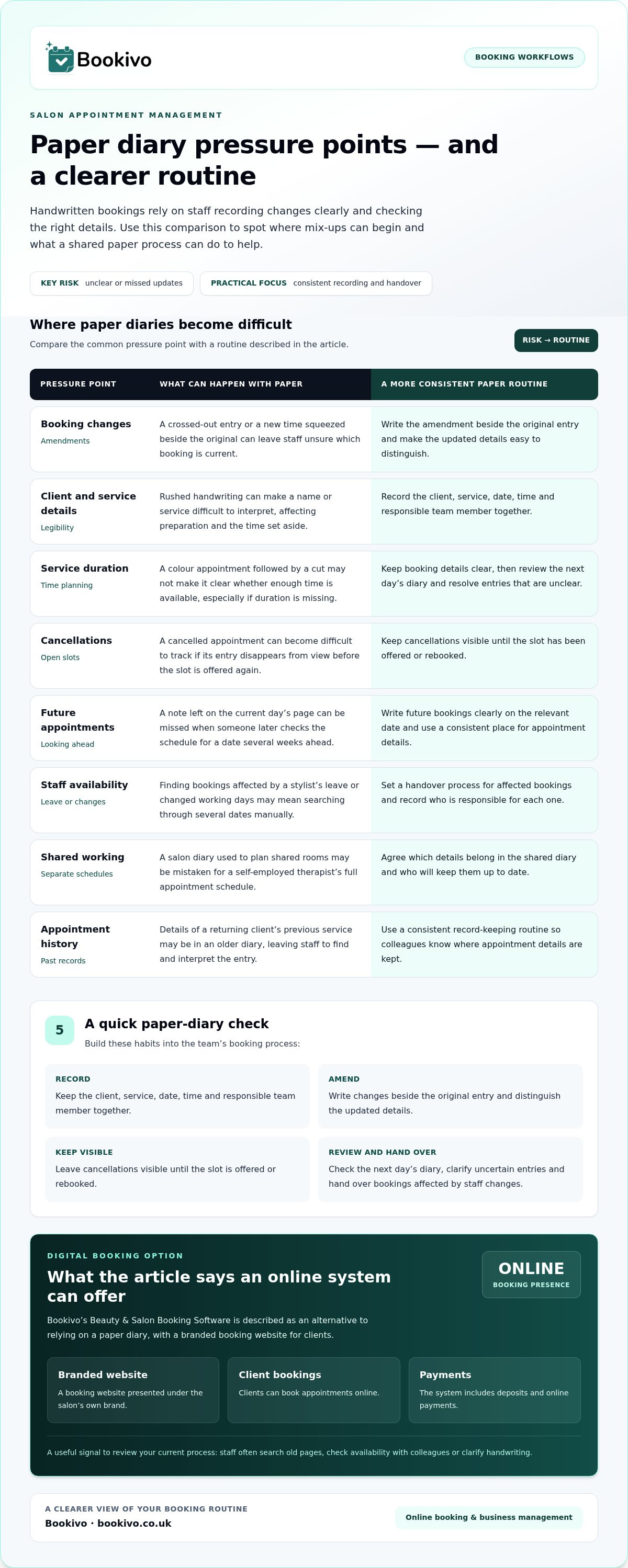
A paper diary depends on staff recording every booking clearly and updating it whenever plans change. If a client rearranges a brow appointment by phone, someone must amend the diary and make the original slot available again. A crossed-out entry can still cause confusion if the new time is squeezed beside it or written on another page.
Hard-to-read handwriting can make important details easy to misinterpret. A stylist reading a rushed note might mistake a fringe trim for a restyle, or misread a client’s name while preparing for the day. This can affect the time set aside, the products or equipment prepared and the conversation when the client arrives.
Service duration is another scheduling challenge. A diary may show a colour appointment followed by a cut without making it clear whether there’s enough time for both services. If the duration is missing or the booking is squeezed into a narrow slot, staff may need to check another record or ask the colleague who took the booking.
Managing future appointments can be awkward too. A client who wants to book their next visit before leaving may need a date several weeks ahead. Staff have to find the right page, check the stylist’s availability and write the booking clearly. A note left on the current day’s page can be missed when someone checks the future schedule later.
Changes to staff availability also need careful handling. If a stylist takes leave or changes their working days, the salon must identify affected bookings and contact those clients. With a paper diary, staff may have to search through several dates manually. Recording who is responsible for each booking helps clarify who should make the update.
Separate working arrangements add another layer of complexity. A self-employed therapist based at a salon may also see clients elsewhere, so they need a separate way to manage their appointments. If the salon diary is used to plan shared rooms, agree which details to record and who will update them. Clear boundaries prevent the shared diary from being mistaken for the therapist’s full schedule.
Paper can make appointment history harder to use consistently. A returning client may ask for the same service as before, but the relevant note could be in an older diary. Staff then have to find the past entry and interpret it. A consistent record-keeping routine makes it clear where appointment details are kept and how colleagues should refer to them.
To make a paper-based process more reliable, agree a simple routine:
- Record the client, service, date, time and responsible team member together.
- Write amendments beside the original entry, with the updated details easy to distinguish.
- Keep cancellations visible until the slot has been offered or rebooked.
- Review the next day’s diary and resolve unclear entries with the person who made them.
- Set a handover process for bookings affected by staff leave or schedule changes.
These steps give staff a shared method, but every booking still relies on someone making and checking the right entry. Notice how often your team searches old pages, asks colleagues to confirm availability or has to clarify handwriting. These are practical signs that the diary may no longer suit the way you manage appointments.
Bookivo: Beauty & Salon Booking Software
Bookivo offers Beauty & Salon Booking Software for salons ready to manage appointments through an online system instead of relying on a paper diary. Its online appointment booking system includes a branded booking website, where clients can book appointments, pay deposits and make online payments.
An online booking system can suit salon owners who want to manage appointments digitally, whether they work alone or coordinate a team. It’s a practical alternative when handwritten updates and separate booking records become difficult to manage, while keeping the salon’s booking presence under its own brand.
Visit Bookivo’s website to explore the booking system for your business.
Make your next booking process work for you
Problems with using a paper diary for a salon can prompt a broader question: what should your booking process make easier as your business develops? A solo professional may value independence, while a growing team may need a shared way to coordinate work. Decide what matters most to your salon before choosing how to manage appointments.
You don’t have to change every part of your routine at once. Start with a clear priority, such as giving clients a convenient way to book or helping your team manage appointments consistently. Then consider whether an online system supports that goal and suits the way your business operates. A focused decision is easier to assess than changing tools simply because they’re new.
Choose the approach that supports the salon you’re building, and take the next step with confidence.