Salon cancellation policy examples for fees and deposits
Explore salon cancellation policy best practices 2026, with practical examples for notice periods, fees and deposits to set clear, fair booking terms.

A practical starting point for salon cancellation policy best practices in 2026 is to allow clients to cancel without a fee when they give at least 24 hours’ notice, then charge 50% of the scheduled service for a later cancellation. Set the terms out clearly before clients book, so they know what to expect. Apply them consistently to make fee conversations feel less personal.
It can feel awkward to charge a client who cancels at short notice, especially when you work face to face. A clear cancellation policy gives you a calm, consistent way to explain any charge and helps clients understand that their appointment time has been reserved for them.
This guide explains how to choose a notice period, decide when deposits may be appropriate and set out cancellation fees in plain English. It also covers how reminders and online payment tools can make the process easier to manage, without turning every cancellation into a difficult conversation.
Key Takeaways
- Choose notice periods that reflect the appointment, and make the cancellation terms clear before clients book.
- Explain fees calmly and consistently, so clients understand when a charge applies and why.
- Use deposits and reminders to make booking expectations easier to communicate and manage.
- Review your policy for fairness to clients as well as protection for the time you reserve.
Automating deposits, reminders and fee collection
Salons can set cancellation charges and deposit conditions in their booking terms. Explain the charge before confirming an appointment, specify when it applies and follow the policy consistently. Clients then know the terms before they book, and staff have a straightforward process to follow.
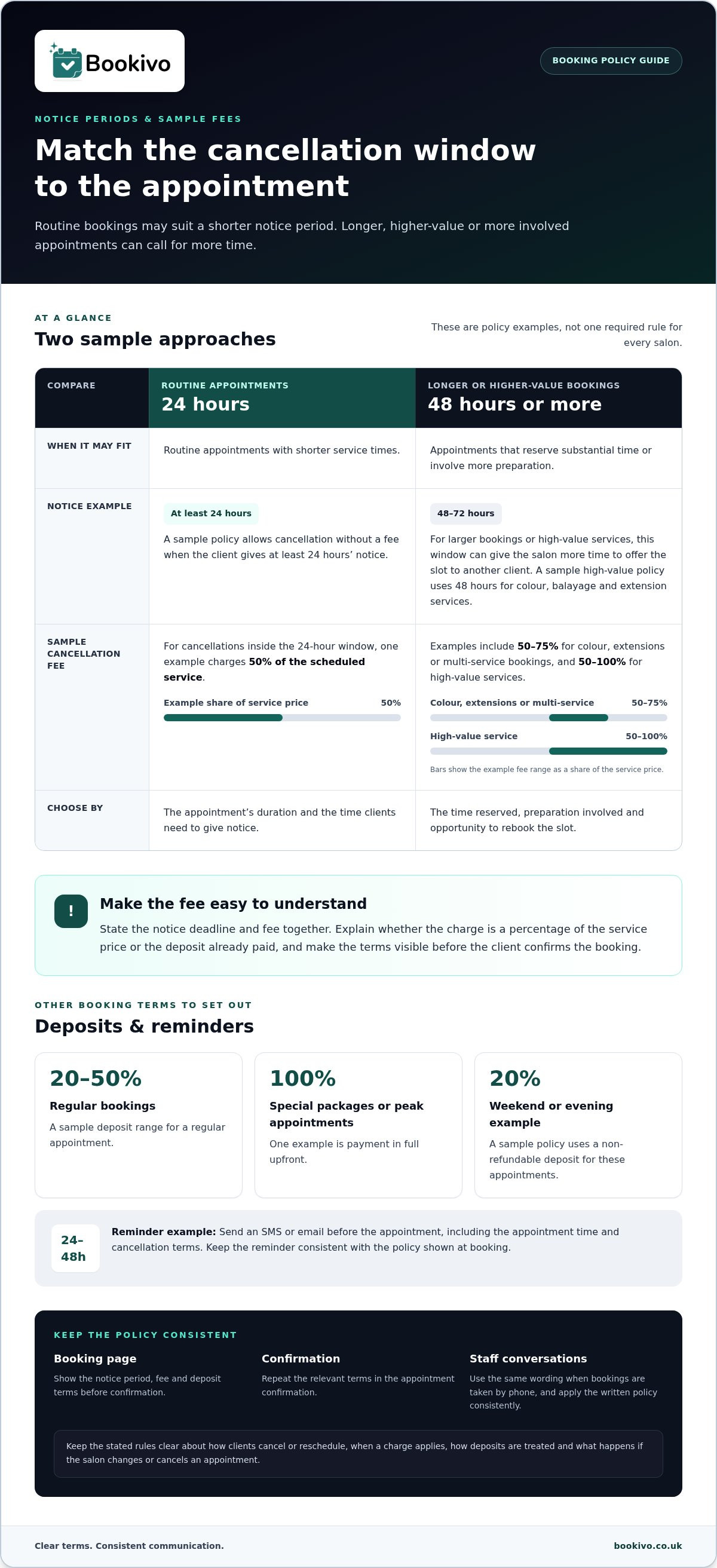
Match the deposit to the appointment. A salon might request 20-50% for a regular booking, or require 100% upfront for a special package or peak appointment. One sample policy sets a 20% non-refundable deposit for weekend and evening appointments. Make the percentage and refund conditions visible during booking, rather than relying on a conversation clients may forget.
For card payments, explain the steps in plain language: whether a card is needed to book, how much is charged at booking and when the remaining balance is due. Display deposit terms alongside the payment step. Handle payment information securely and consider your UK GDPR responsibilities.
Automate reminders to reinforce the policy before the appointment. For example, send an SMS or email 24 to 48 hours beforehand, including the appointment time and cancellation terms. A reminder gives clients a prompt to contact the salon if plans change, while a consistent message helps staff avoid explaining different rules individually.
Situation: A client books an evening appointment and later forgets the deposit conditions. Action: The salon displays its 20% deposit rule at booking, records the payment, then sends a reminder 24 to 48 hours before the visit. Result: The client has the terms in writing and can see what happens if they cancel.
For an unannounced no-show, one sample card-on-file policy charges 100% of the booking amount. If you use a charge like this, state the trigger and amount clearly before booking. Automated payment records and written terms help staff explain a fee calmly and consistently, rather than negotiating it at reception.
What Is Better: A 24-Hour or 48-Hour Cancellation Notice?
A 24-hour window can suit routine appointments with shorter service times. One sample policy lets clients cancel without a fee when they give at least 24 hours’ notice, then charges 50% of the scheduled service for cancellations inside that window. State the deadline and fee together, so clients can understand the difference before booking.
Situation: A client cancels a standard appointment the day before. Action: The salon applies its published 24-hour rule, waiving the fee when notice meets the deadline. Result: The client knows what to expect, and staff can explain the decision consistently.
A longer window can better fit appointments that reserve substantial time or involve more preparation. A sample high-ticket policy asks for 48 hours’ notice for colour, balayage and extension services. For larger bookings or high-value services, a 48-72-hour notice period gives the salon more time to offer the slot to another client.
Situation: A client cancels a balayage appointment shortly before the visit. Action: The salon uses its 48-hour notice rule and clearly states the applicable charge in advance. Result: The policy reflects the longer appointment and gives the salon a defined process, rather than leaving staff to decide case by case.
Set the fee to match the booking and the notice given. Examples include 50-75% of the service price for colour, extensions or multi-service bookings, and 50-100% for high-ticket services. These are policy examples, not one mandatory charge for every salon. Explain whether the fee is a percentage of the service or the deposit already paid.
Use the same wording across your booking page, confirmation and cancellation message. A simple comparison helps: routine appointments may use 24 hours, while longer or higher-value bookings may need 48 hours or more. Review whether each slot’s duration and opportunity to rebook support that choice. A clear branded booking page can present the policy alongside appointment details.
Why Is a Salon Cancellation Policy Essential for UK Salons?
UK consumer-protection rules apply to salon cancellation fees and deposits. Set out the terms clearly before the booking is made, including when a charge applies and how you treat any deposit.
A cancellation policy should explain how clients can cancel or reschedule, the notice period, any fees, deposit terms and what counts as a no-show. It should also explain what happens if the salon changes or cancels an appointment.
Use the same wording wherever clients make or manage bookings. Publish the policy on your website and booking page, include it in appointment confirmations, and ask staff to explain it when taking bookings by phone. Consistent information helps prevent misunderstandings across different booking routes.
Make acknowledgement part of the booking process. Ask clients to read the policy before confirming, then include the relevant terms in their confirmation message. A reminder can repeat how to cancel and direct clients to the policy, rather than introducing a new rule.
Situation: A client challenges a fee after cancelling at short notice. Action: The receptionist calmly refers to the policy shown during booking and explains the stated notice period and charge. Result: The conversation stays focused on the agreed terms, rather than becoming a personal disagreement. Staff should apply the written policy consistently.
For example, before confirming a booking by phone, explain the notice period, fee and deposit conditions. Clients booking online should see equivalent information before completing their booking. Both routes should give clients a clear opportunity to understand the terms.
Review the wording when your services or booking process change. Be specific: identify which appointments require a deposit, explain how clients should cancel and state how charges are calculated. Clear details help clients make informed decisions and give staff a consistent response when questions arise.
UK consumer-protection rules apply, so explain cancellation fees and deposit terms clearly before clients book.
Why cancellation policies matter to UK salons
An unfilled slot is more than a gap in the diary. It can mean lost income, unused staff time and fewer opportunities to book another client. A clear cancellation policy gives your salon a consistent way to manage this risk. Reviewing cancellations can also help you identify which appointment types may need different terms.
These figures show why a missed appointment can affect the wider business, not just that day’s schedule.
Situation: A salon regularly finds a late opening in its diary after a client fails to attend. Action: It records cancellations and no-shows, then reviews which services and appointment times are affected. Result: The owner can tailor clearer terms to actual scheduling pressures instead of applying the same approach without review.
A policy also supports fair, consistent conversations. If staff explain a charge differently, clients may question whether the rule is being applied evenly. Use one written policy, give every team member the same wording and record the outcome of each cancellation. This creates a clearer basis for handling queries and reviewing patterns.
Situation: A client cancels a long appointment, leaving too little time to offer the slot again. Action: The salon records the lost booking time and follows its stated cancellation terms. Result: Staff can explain the decision by referring to the policy, while the salon can assess whether the notice period suits that service.
Applying salon cancellation policy best practices in 2026 means using cancellation records to guide practical changes. Compare the services affected, how much notice clients give, and whether released appointments can be rebooked. Make the policy clear, apply it consistently, and review whether it reflects the time your salon reserves; a branded booking page can help clients find the terms.
Bookivo: Beauty & Salon Booking Software
Bookivo helps salons bring appointment booking, deposits and policy communication into a more organised process. Its branded booking website lets clients book and manage appointments, while the platform supports online deposits and payments. You can present your booking terms alongside the appointment process.
Whether you work solo or manage a busy team diary, beauty and salon booking software can help organise booking administration. Use your written cancellation policy to decide what clients need to know before booking, then present those terms clearly on your booking website. The software supports the process; your policy sets the notice periods, deposit conditions and fees.
If you’d like to explore how online booking could fit your salon, visit Bookivo’s website.
Keep your booking experience clear as your salon grows
For salon cancellation policy best practices in 2026, treat your policy as part of the client experience, not wording to set once and forget. Revisit it when your services, booking process or team arrangements change. Keep the terms practical for your diary and easy for clients to understand.
Bookivo provides beauty and salon booking software, aesthetics clinic booking software and an online appointment booking system. These tools can support a more organised booking process while you remain in control of your business’s cancellation terms. Choose the setup that suits how you want clients to book and manage appointments.
A clear, well-presented policy helps you set expectations with confidence. Take the next step towards a professional booking experience that is manageable for your team and clear for your clients.
Frequently Asked Questions
How do I enforce cancellation charges without awkward confrontations?
Keep the conversation factual and refer to the client’s booking details. For example, say, “Your appointment was booked under our cancellation terms, which explain this charge.” Avoid debating motives or making exceptions on the spot. If a client disputes the fee, note their concern and follow your salon’s review process. A consistent approach helps staff handle difficult conversations professionally.
How to Implement Your Salon Policy Effectively?
Put your policy into practice with a clear sequence. First, write separate terms for routine and longer appointments if their booking needs differ. Next, show clients the relevant terms before they confirm. Then brief staff on how to explain the policy and record cancellations consistently. Review client questions and diary changes regularly to spot unclear wording and update the process when your services change.
What Is the Financial Cost of an Empty Chair?
An empty chair means losing the income an appointment could have generated, while staff time and other operating costs remain. Estimate the potential impact by multiplying your average service charge by the number of missed appointments over a chosen period. Treat this as potential lost turnover, not profit: the calculation does not account for costs saved or whether the slot was later rebooked.
What is the standard cancellation fee percentage in the UK?
A frequently used UK salon policy example is a 50% charge for a late cancellation, but it isn’t a universal rate that every salon must use. Set a fee that reflects the appointment and explain it before booking. For instance, a salon could state whether its charge is calculated from the service price or taken from a deposit already paid.
Will charging a cancellation fee scare away clients?
A clearly explained fee sets expectations before a client books; it should not feel like a surprise penalty. Use calm, plain language and make the cancellation route easy to find. Clients who need to change an appointment should be able to understand the deadline and process without searching through several messages. Consistency makes the policy part of a professional booking experience.
What is a reasonable salon cancellation notice period in the UK?
A 24-hour notice period is a practical example for routine appointments. Salons can use 48 hours or longer for lengthy, high-value or group bookings, where filling the slot again may be harder. Choose the window according to the time reserved, preparation involved and likelihood of rebooking. State the deadline clearly, including whether it means calendar hours before the appointment.