What to include in nail technician client records
Learn what client record keeping for nail technicians should cover, from sensitivities and service history to clear notes, secure storage and client access.

A useful nail client record does more than list contact details. Good client record keeping for nail technicians captures relevant nail and health information, product sensitivities, service history and design preferences, helping you prepare consistently for each appointment. Record what the client tells you and what you observe, without attempting to diagnose a condition.
Appointment notes can become inconsistent when you move straight from one client to the next. A simple routine helps you keep useful information without turning every appointment into an admin task. This guide explains what to include on a record card, how to keep notes clear and consistent, and how to approach secure storage, retention and client access.
Key Takeaways
- Capture aftercare advice and, when you decline a service, record the reason and any next step discussed.
- Use a consistent note-taking routine so each appointment record is clear and easy to follow.
- Set a retention approach that reflects your insurer’s requirements, and store records securely.
- Use past notes to support a more considered, consistent client experience at future appointments.
1. What information does a nail technician client record card include?
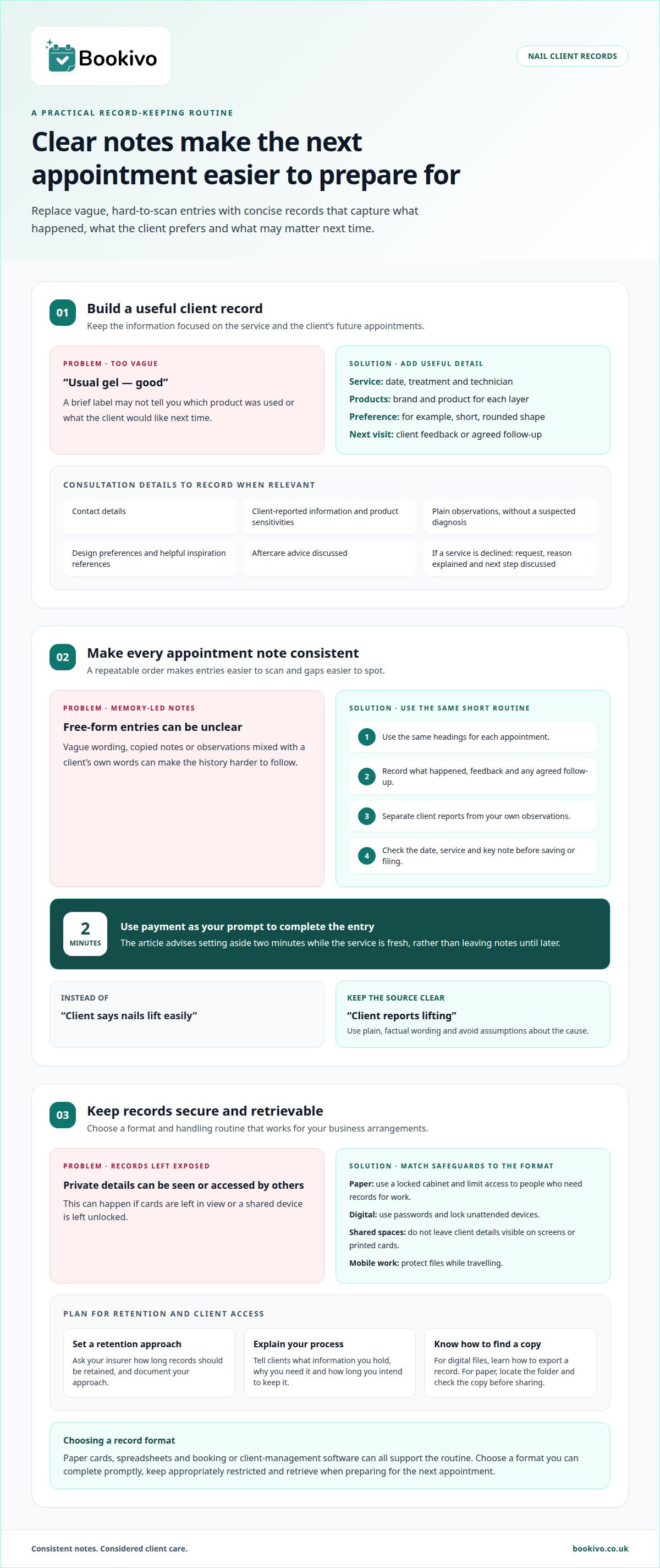
A practical approach to client record keeping for nail technicians starts with contact details and a consultation before or during the first appointment. Note relevant nail condition, information that may affect nail care, product sensitivities and design preferences. Ask what the client reports, then describe visible or tactile observations plainly. For example, write “redness around the nail”, not a suspected diagnosis.
Make each service entry useful for the next visit. Include the service date, treatment and technician’s name, with concise notes about cuticle health, nail growth or design preferences. Record the specific products used, including the brand and product for each layer, rather than writing only “gel”. If a client shares inspiration images, note the reference when it helps guide their chosen design.
Aftercare notes can record the advice discussed at the appointment. Keep them factual and relevant to the service. If you decline a service, note what the client requested, the reason you explained and any appropriate referral discussed. This creates a clear account without suggesting a diagnosis. Good client record keeping for nail technicians also separates the client’s reported symptoms from your observations.
Are nail client record-keeping rules different for mobile technicians and salon employees? The information worth recording is broadly similar, but working arrangements can affect how records are stored and accessed. Mobile technicians need a secure way to protect files while travelling, while salon employees should follow their salon’s record-handling process.
What free or paid client record-keeping systems are available for UK nail technicians? Options include paper cards, spreadsheets and booking or client-management software. Choose a format that makes it practical to record consultation details consistently, restrict access appropriately and retrieve a client’s history when needed.
Keep entries focused on information needed for the service. Update them when a client reports a new sensitivity or changes a preference, and distinguish the client’s words from your observations.
2. Keeping appointment notes brief and consistent
Use the same short template after every appointment instead of relying on free-form notes from memory. Set aside two minutes during payment to complete the entry while the service is fresh. A consistent order makes gaps easier to spot and earlier visits quicker to scan.
Keep each note focused on what happened and what may matter next time. Record the service outcome, the client’s feedback and any agreed follow-up. Separate the client’s words from your observation: “Client reports lifting” is clearer than “nails lift easily”. Avoid assumptions about the cause.
Use plain terms consistently. If you shorten a product name or service in your notes, keep a small reference key so another technician can understand it. Avoid vague entries such as “good” or “usual”. Add a useful detail instead, such as “client prefers a short, rounded shape”. A specific preference can guide the next appointment without a lengthy explanation.
Review each entry before saving or filing it. Check that the date, service and key note are present, then clarify any unclear wording. If nothing has changed since the previous visit, say so briefly rather than copying an old entry as if it were new. This keeps the client’s history readable and distinguishes each appointment.
A paper card, spreadsheet or digital client record can all support a consistent routine. The best fit is one you can complete promptly and retrieve when preparing for the next appointment. Keep the same headings across clients, and avoid collecting unrelated personal details. A digital booking and client-management setup may suit technicians who want appointment administration and client information in one working routine.
Use payment as a prompt to complete the entry. Two minutes is the advised time, making record completion part of the routine rather than an afterthought.
3. Record retention and client access to data
Set a retention process based on the purpose of each record and your insurer’s expectations. Ask your insurer how long client records should be retained, then document your approach. Tell clients what information you hold, why you need it and how long you intend to keep it. Review the process if your insurer’s guidance or business arrangements change.
Do nail technicians need client consent to store health and allergy information? A signed form alone does not explain every aspect of how information is handled. Use the Information Commissioner’s Office (ICO) guidance to understand the appropriate basis and safeguards for collecting and using this information.
Are there UK industry or local council requirements for nail technician client records? Don’t assume one record-keeping process applies to every working arrangement. If council licensing conditions relate to your premises or services, refer to the relevant council’s published information. For privacy questions, consult the ICO’s UK data-protection guidance.
Store paper cards in a locked cabinet and limit access to people who need them for work. Protect digital records with passwords and lock devices when they’re unattended. Don’t display client details on a shared screen or leave printed cards where visitors can see them.
How should you respond when a client asks for their data? Have a practical way to find and provide a copy of the information you hold. For digital files, learn how to export the relevant record. For paper files, locate the client’s folder and check the copy before sharing it.
What are the risks and penalties for mishandling nail client data in the UK? Inappropriate access or disclosure can expose private information and lead to complaints or loss of trust. Consequences depend on the circumstances, so use ICO guidance for authoritative information rather than relying on a general penalty figure.
4. Why nail technicians should keep client records
A client record helps you prepare for the person, not just the appointment slot. Review it before each manicure or pedicure to remind yourself of the client’s preferences, previous services and relevant notes. This continuity can help clients feel listened to, especially when they return after a gap.
Records can also make changes easier to spot across appointments. For example, if a nail lifts on the same finger over four consecutive visits, dated notes show the pattern clearly. Record what you observe and what the client reports, then use those details to guide a service discussion without suggesting a medical cause.
There’s practical value in remembering small preferences. A note that someone likes short, rounded nails, a particular colour family or a certain design reference can make the next consultation more focused. Check the latest entry with the client, as preferences can change between visits. This simple review helps you avoid relying on memory alone.
Consistent records can support clear communication when a client raises a concern about an earlier appointment. A dated service history gives you a factual account of what was done and discussed. Keep the wording neutral, distinguish observations from client comments, and note any follow-up agreed at the time.
Trust grows through attentive, consistent service. Use records to prepare, personalise and communicate, not to make assumptions about a client. A client record system for appointment notes can help bring those details into a more organised routine.
Make the record useful at the next visit: review it, confirm what still applies and update only what has changed.
Building trust is part of providing a nail service. Reviewing client record cards before each manicure or pedicure helps technicians prepare for the appointment, remember preferred looks and take relevant notes into account.
Bookivo: Beauty & Salon Booking Software
Bookivo provides nail technicians with an online appointment booking system and a branded booking website to manage appointments. It can help bring your booking process together with the way you organise client information and prepare for each visit.
Use a clear record-keeping routine alongside your booking process: keep client notes accurate, relevant and securely handled. Bookivo supports appointment management, deposits and online payments, bringing key booking tasks together while you remain responsible for managing client records appropriately.
Visit Bookivo’s website to explore the booking platform.
Build a routine that works for your business
A dependable approach to client record keeping for nail technicians should fit naturally around your work. Choose a process you can maintain on busy days and use it consistently. As your client base changes, review whether your approach still supports clear, professional appointments.
For booking and business management tools alongside that routine, Bookivo offers Beauty & Salon Booking Software, Aesthetics Clinic Booking Software and an Online Appointment Booking System. Explore how its booking platform can fit the way you run your nail business.
Take the next step at a pace that feels right for you. A considered, consistent process can help you manage each appointment with greater confidence.
Frequently Asked Questions
What information does a nail technician client record card include?
Make the card easy to complete and understand, with clear labels, dated entries and enough space for useful notes. For example, distinguish a client’s description from a technician’s observation instead of combining them in one field. If you use abbreviations, apply them consistently and make sure another authorised team member can understand them without guessing.
Why do nail salons keep client record cards?
Records can help a salon respond accurately when a client asks about an earlier appointment. A dated note may clarify which service they mean or what follow-up was agreed. For a team, a shared, consistent record can also support smoother handovers between technicians. Use it to prompt a fresh conversation, not as a substitute for checking details with the client.
What client records should UK nail technicians keep?
Keep a clear timeline linking each appointment to its notes and relevant client communication. For example, if a client changes an appointment and asks you to retain a particular design reference, record the update against the correct visit. Avoid duplicate copies across unrelated files, which can make it harder to identify the current entry.
How long should UK nail technicians retain client records?
Use a simple review process so old files don’t stay active by default. Mark when a client’s relationship with your business ends, then review the record against your insurer’s retention expectations and your stated information-handling approach. Apply the review consistently to paper and digital files, and record when a file is archived or removed.
What should a nail client consultation and consent form include?
Design the form so clients can read each prompt easily and answer clearly. Leave space for them to clarify an answer or correct a misunderstanding during the conversation. Keep consent wording separate from general privacy information, and give the client the opportunity to ask questions before agreeing. Review the form when your services or consultation process change.